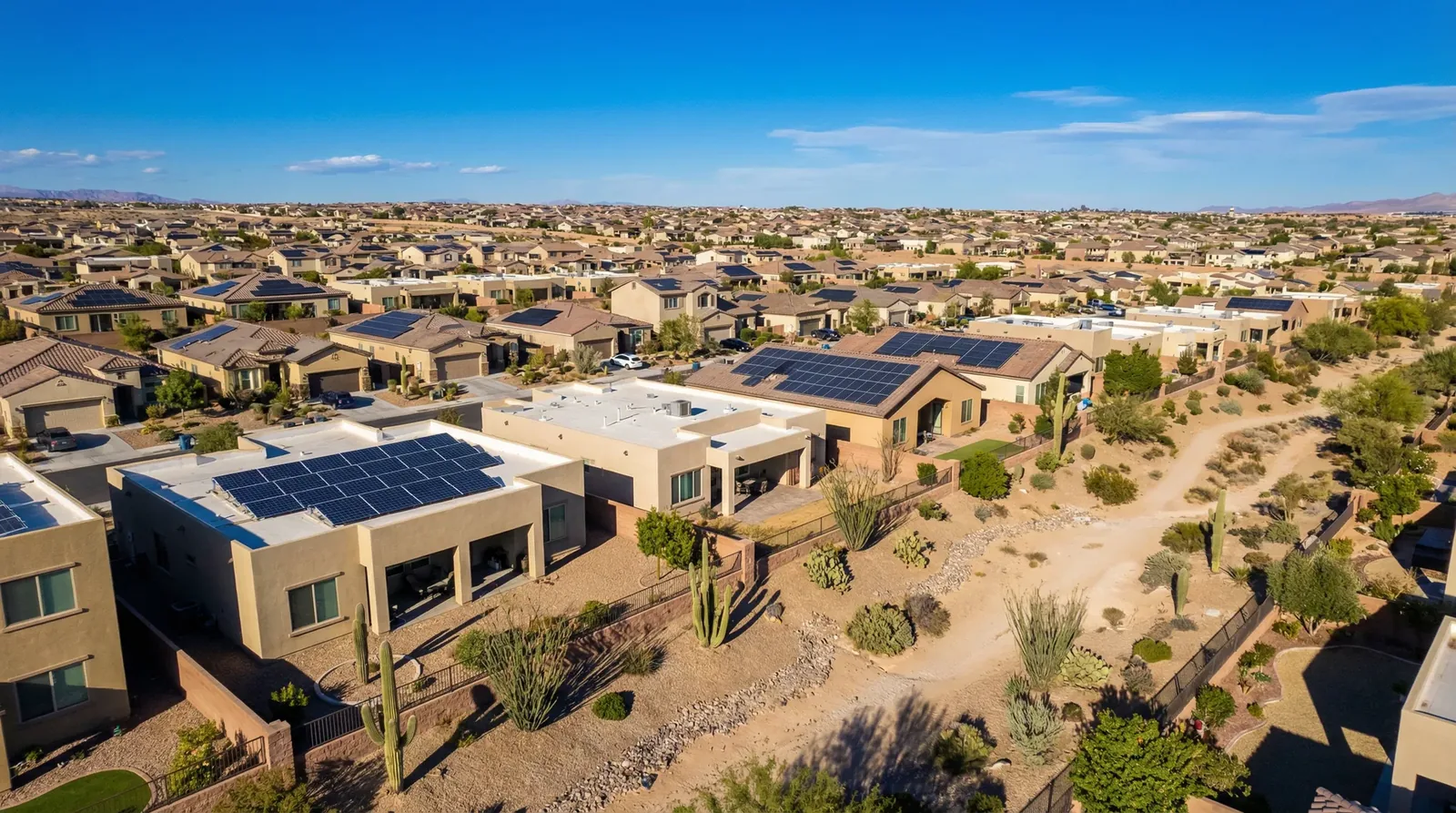
Solar Panels in Nevada
One of the Sunniest States in America
$1,300/yr
Avg. Annual Savings
6.4 peak hrs/day
Peak Sun Hours
9–12 years
Payback Period
$13,000–$20,000
Avg. System Cost
Overview
Is Solar Worth It in Nevada?
The state of Nevada is working with utility companies to move twenty-five percent of the state's electricity to renewable sources by 2025. With over 300 sunny days per year and some of the highest solar irradiance in the country, Nevada homeowners are in an excellent position to go solar.
Nevada's combination of strong sunlight and net metering makes it one of the most financially attractive states for residential solar in the country. Note: the 30% federal ITC expired December 31, 2025.
Benefits
Why Go Solar in Nevada
Reduce Your Electric Bill
Nevada homeowners save an average of $1,300/yr after going solar.
State & Local Incentives
Nevada offers property tax exemptions, net metering credits, and other state-level incentives that reduce your net cost. The federal 30% ITC expired Dec 31, 2025.
Increase Home Value
Solar panels increase your home's resale value — and are excluded from property tax in most states.
Energy Independence
Lock in your electricity rate and protect against rising utility costs for 25+ years.
Available Incentives
Nevada Solar Incentives & Tax Credits
NV Energy Rebates
RebateNV Energy offers rebates for residential solar installations through its SolarGenerations program, reducing your upfront system cost.
Net Metering
Net MeteringNevada law requires utilities to offer net metering. Excess solar energy is credited at a rate set by the Public Utilities Commission.
Property Tax Abatement
Tax ExemptionNevada offers a partial property tax abatement for residential solar systems, reducing the property tax impact of your installation.
Federal Solar Tax Credit (Expired)
Tax CreditThe federal 30% residential solar tax credit (Section 25D) expired December 31, 2025 and is no longer available for new purchases in 2026. Nevada homeowners should focus on the state's property tax exemption, sales tax exemption, and NV Energy net metering program.
Common Questions
Nevada Solar FAQ
Ready to go solar in Nevada?
Get matched with top-rated local installers — free quotes, no obligation.