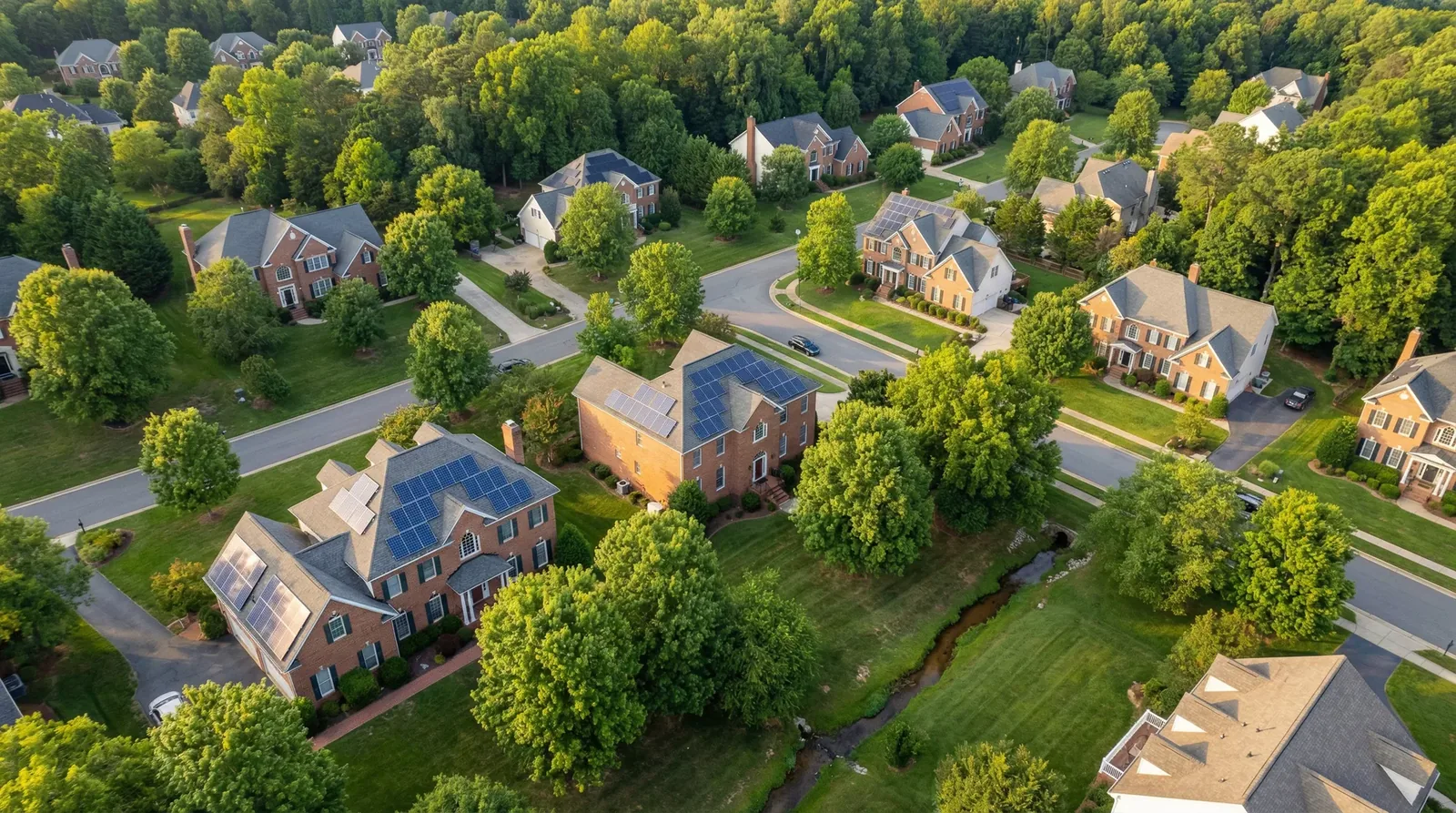
Solar Panels in North Carolina
Duke Energy's $62M Solar Rebate Program
$1,000/yr
Avg. Annual Savings
5.0 peak hrs/day
Peak Sun Hours
11–15 years
Payback Period
$13,000–$20,000
Avg. System Cost
Overview
Is Solar Worth It in North Carolina?
Duke Energy of North Carolina has proposed a $62 million solar rebate program designed to help residents with the installation of solar panels on their property. North Carolina has consistently ranked in the top 5 states for total installed solar capacity, driven by strong utility programs and Note: the 30% federal ITC expired December 31, 2025.
North Carolina homeowners benefit from a combination of Duke Energy rebates, net metering, and property tax exemptions that make solar an increasingly attractive investment.
Benefits
Why Go Solar in North Carolina
Reduce Your Electric Bill
North Carolina homeowners save an average of $1,000/yr after going solar.
State & Local Incentives
North Carolina offers property tax exemptions, net metering credits, and other state-level incentives that reduce your net cost. The federal 30% ITC expired Dec 31, 2025.
Increase Home Value
Solar panels increase your home's resale value — and are excluded from property tax in most states.
Energy Independence
Lock in your electricity rate and protect against rising utility costs for 25+ years.
Available Incentives
North Carolina Solar Incentives & Tax Credits
Duke Energy Rebate Program
RebateDuke Energy's proposed $62 million rebate program provides direct rebates to North Carolina residential solar customers, reducing upfront system costs.
Net Metering
Net MeteringDuke Energy and other NC utilities offer net metering, crediting residential solar customers for excess energy sent to the grid.
Property Tax Exemption
Tax ExemptionNorth Carolina exempts 80% of the appraised value of solar energy equipment from property taxes.
Federal Solar Tax Credit (Expired)
Tax CreditThe 30% federal residential solar tax credit (Section 25D) expired December 31, 2025. Not available for 2026 purchases. Solar leases/PPAs may still benefit through commercial credits.
What Changed in 2026 for North Carolina Solar
The federal solar tax credit expired December 31, 2025 — here's what that means for North Carolina homeowners and what options remain.
The 30% Federal Tax Credit Has Expired
The federal Residential Clean Energy Credit (Section 25D) expired December 31, 2025. North Carolina homeowners purchasing solar in 2026 will not receive the 30% federal credit. A typical 8kW system that previously cost ~$11,200 after the ITC now costs $16,000–$20,000 before state incentives. North Carolina does not have a state income tax credit for residential solar, so the federal expiration is the most significant change for NC homeowners in 2026.
Lease and PPA Customers Are the Exception
Solar leases and Power Purchase Agreements (PPAs) remain a viable path in 2026. The installer retains ownership and can claim commercial federal tax credits, passing savings through as a lower monthly rate. North Carolina has a growing solar financing market, and lease/PPA products are available from multiple providers -- this option may now offer better first-year economics than a cash purchase for many NC homeowners.
What Still Drives the Math in North Carolina
North Carolina's property tax exclusion for solar equipment, Duke Energy's net metering program, and the state's strong sun (4.9 peak hours/day) all remain intact. Duke Energy has been filing for rate increases, which strengthens the long-term case for solar even without the federal credit. NC ranks in the top 5 states for installed solar capacity -- the installer market is competitive, which helps keep prices below the national average. Expect payback periods of 10–14 years for 2026 purchases.
Common Questions
North Carolina Solar FAQ
Local Solar Companies
Solar Companies by City in North Carolina
Find pre-vetted local solar installers in your city. Compare quotes and start saving.
Ready to go solar in North Carolina?
Get matched with top-rated local installers — free quotes, no obligation.